---
title: "The Emile: An Honest Account of a Houston Multifamily Loss"
description: An honest account of The Emile's multifamily loss in Houston, detailing lessons learned and future strategies for successful investing.
image: https://blog.thequattroway.com/hubfs/image-1.png
---
[](https://www.thequattroway.com/)
- [About](https://www.thequattroway.com/about)
- [About Quattro](https://www.thequattroway.com/about)
- [Our Strategy](https://www.thequattroway.com/our-strategy)
- [FAQ](https://www.thequattroway.com/faq)
- [Assets](https://www.thequattroway.com/quattro-assets)
- [Philanthropy](https://www.thequattroway.com/philanthropy)
- [Podcast](https://www.thequattroway.com/podcast)
- [Contact](https://www.thequattroway.com/contact)
- [Investor Login](https://thequattroway.portal.agorareal.com/#/login?redirectUrl=%2F)
[New User Registration](https://www.thequattroway.com/quattro-portal)
Back

###### [BY Quattro Capital Team](https://blog.thequattroway.com/quattro-capital-blog/author/quattro-capital-team)
- ###### 12 min read
- ###### May 29, 2026 3:34:26 PM
# The Emile: An Honest Account of a Houston Multifamily Loss
###### Share On:
[](mailto:?subject=Check%20out%20https://blog.thequattroway.com/quattro-capital-blog/the-emile%20&body=Check%20out%20https://blog.thequattroway.com/quattro-capital-blog/the-emile&media=https://5654840.fs1.hubspotusercontent-na1.net/hubfs/5654840/image-1.png)
# **The Emile: An Honest Account of a Houston Multifamily Loss**
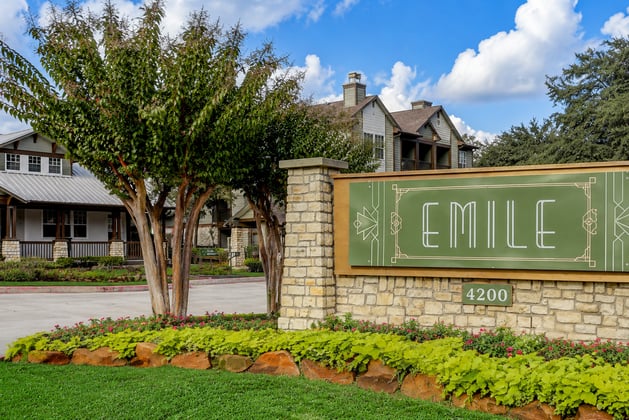
In September 2024, the loan on The Emile entered default. For the four of us at Quattro, that day arrived after nearly two years of trying to prevent it. This is the story of how we got there. It is also the story of what we tried, what we missed, and what we are carrying into every deal we underwrite from this point forward. We owe our investors that account. We also owe it to ourselves.
This is not a list of excuses. It is context and an open sharing of lessons learned.
## **What data indicated when we bought it**
When we acquired The Emile, the Houston multifamily market looked durable and the property looked like a credible value-add investment opportunity. Occupancy concerns surfaced during due diligence, which we used to negotiate the purchase price from approximately $42 million down to approximately $38 million. That lowered the basis by $4 million. We re-designed the underwriting and infused additional capital to provide the operating cash needed for the renovation and lease-up period, which would also help protect investor capital.
The plan followed the same approach many in the industry were running between 2018 and 2022. Acquire properties needing work. Renovate units quickly, lift occupancy, improve operations, then refinance into long-term debt at favorable terms within two years. We moved quickly, as we had many times before, renovating 140 of 240 units within the first four months of ownership.
## **What changed**
For full context, it is important to remember the backdrop of 2022. The Emile closed in December 2022, during peak inflation. The Consumer Price Index (CPI) had risen 9.1% year-over-year in June 2022, the largest 12-month CPI increase since November 1981. Other inflation metrics were historic as well: groceries up 13.5%, energy up 41.6%, gasoline up 59.9%, while wages rose only 5.7%. Households and businesses alike were pressed hard on expenses, including renters.
The Federal Reserve responded. Between mid-2022 and throughout 2023, interest rates more than doubled relative to our acquisition assumptions, which had already accounted for anticipated rising inflation and rates. The Fed raised rates faster than at almost any point in modern history, far faster than our rate cap insurance was designed to hedge.
At the same time, Houston experienced one of the largest waves of new multifamily supply in the country. Competing properties began offering steep concessions of eight to twelve weeks of free rent to backfill vacancy, placing further unexpected pressure on Emile’s occupancy and operations.
Our renovated units, which we had underwritten to lease at market rate, were suddenly competing against heavily incentivized new construction. The lease-up we had projected to complete within six months, a pace we had achieved regularly on previous investments, stretched to roughly 18 months.
While revenue lagged during the elongated lease-up, expenses surged. Property taxes soared and insurance costs more than doubled. Electricity and water rose nearly 30%.
Houston, like many U.S. real estate markets, was also affected by a surge in fraudulent rental applications during this period. With renters under significant financial pressure from the highest inflation in decades, some bad actors turned that pressure into an opportunity, and online “educators” began teaching applicants how to falsify information in order to qualify for apartments they could not otherwise lease.
The industry responded by improving screening technology designed to detect fraudulent applications. Our property manager was an early adopter of these tools, which helped reduce bad leases and protect the resident community. Even with stronger screening in place, however, the volume of qualified applicants who could lease responsibly and become good long-term neighbors remained too low.
None of these pressures were unique to The Emile. Hundreds of billions of dollars in multifamily loans originated during the low-rate years were navigating the same refinancing environment. We were one operator among many caught in that transition. That is context, not an excuse.
## **What we did**
Even as the macro environment worsened, the property itself improved. By the second quarter of 2025, occupancy had climbed into the mid-90s, with twenty-two more renovated completed and available to rent. Leasing momentum was real. Operationally, we were stabilizing. Financially, we were running out of room.
Operating cash flow never reached the levels we projected at acquisition, and by September 2024, debt service obligations could no longer be sustained from property operations. The loan entered default.
In the months that followed, we pursued every credible path to preserve investor capital. We negotiated forbearance with the lender. We modeled multiple refinance structures, including some we ultimately rejected because the terms would have transferred more risk to our investors than we believed was defensible. We engaged outside equity. We explored a partial lender-to-equity conversion. We pursued a tax abatement through the Houston Housing Authority that would have meaningfully improved net operating income, but state-level policy changes halted abatements on existing construction before our process completed.
We also issued a capital call of approximately $5 million. Our investors committed roughly $1.3 million.
We understood what that number meant, and we did not begrudge any investor who declined. Asking people to put more into a struggling deal during a difficult market is a serious request, and the response was a fair signal.
As a result, the general partners continued working through the remaining challenges without enough capital to fully solve several key problems.
When the loan entered default, lender controls tightened. Cash management restrictions slowed vendor payments. Vendor responsiveness declined. Unit turn timelines extended. This is a familiar feedback loop in distressed commercial real estate, and the downward cycle steepened. Operational disruption pressures occupancy, occupancy pressures NOI, weaker NOI weakens refinance options, and weaker refinance options invite more lender pressure. We stayed engaged and kept working the problem well past the point where many operators would have disengaged.
## **How we were aligned**
We want to be specific about sponsor economics, because alignment matters more than ever when an outcome is painful.
From inception, we, the general partners, deferred both the acquisition fee and all asset management fees. Across the life of the investment, we also contributed approximately $3 million to the deal, in the form of original equity contributions, rate cap purchases and extensions, loan paydowns, and direct operational support.
That alignment did not change the outcome, and we are not offering it as a defense. We are stating it because our investors deserve to know exactly where we stood financially alongside them.
## **A debt problem more than an asset problem**
One conclusion we hold with conviction: The Emile was not a fundamentally broken property. It is a well-located, 1999-vintage community that demonstrated real operational improvement when given the room to function. The pressure that overwhelmed it came from the capital structure, a glut of new supply, and the effects of inflation rather than the physical asset.
That distinction matters because it is not unique to us. A large number of multifamily assets purchased between 2020 and 2022 are sound real estate assets with unsustainable financing under current rates. The properties are not the problem. The capital stacks that were built for a different rate environment and a completely different economy were the real challenges. We do not say this to minimize the loss.
The lender worked with us through the process and negotiated two separate loan modifications intended to grant time to find a solution. The second modification included a $1 million paydown and additional rate cap insurance.
During loan modifications additional operational complexity weighed down the pace of decisions. There were brief windows in early 2025 when occupancy was in the low to mid 90s and a refinance was possible. By that point, however, the decision was not solely ours. We requested approval to pursue both a refinance and a sale, and we were not able to obtain the approvals needed to move either forward within the available window.
The loan modification also carried substantial reporting requirements. Income flowed to the lender first, and disbursements to the property were made from there. This kind of cash management is a normal feature of distressed loans, but it is materially detrimental to a cash-starved investment.
In late 2025, we agreed to a property manager change and entered into negotiations to finalize that transition. Foreclosure proceedings began in April 2026 when we were notified. The change in direction came faster than the prior discussions had led us to expect.
**What we are doing differently**
Principles are easy to write. Specifics are what we owe.
Regarding debt, we now move toward fixed-rate or fully hedged structures on new acquisitions wherever they are available, with loan terms long enough to absorb a prolonged higher-rate environment without forcing a refinance at the wrong moment. Where floating-rate debt is used, we underwrite larger rate caps as a base case rather than an upside hedge, combined with lower leverage.
Regarding reserves, we now require larger operating reserve floors, sized to absorb extended lease-up rather than base-case lease-up. The Emile taught us that stabilization can take roughly twice as long as a base case suggests, and that liquidity is what buys the time to wait for it.
Regarding supply, we now build a multi-year delivery pipeline view into every market underwriting, with explicit stress tests for concession scenarios that match what we saw in Houston between 2022 and 2024.
Regarding expenses, our stress-test scenarios apply double-digit what-if adjustments to each line item to expose sensitivity and test our ability to maintain cash flow in the face of the unknown.
Regarding stabilization, our underwriting now assumes longer lease-up timelines than our prior base cases, and we sensitize cash flow and refinance viability against extended absorption.
None of these changes eliminate risk. Multifamily investing, as with all investing, carries real risk in every market cycle. What we are saying is the assumptions that produced this outcome are not the assumptions we are bringing forward.
## **The part that is not about strategy**
Behind every position in this deal is a real person. Retirement plans. Years of savings. Family goals. Trust that we did not take lightly when it was offered, and do not take lightly now that it has been tested.
We fought for this property for years alongside our investors, and we wish the result had been different. We cannot undo it. ***We will not pretend that the lessons we are carrying forward erase the loss***. What we can offer is the same thing we offered when the deal was healthy: honest communication, transparent stewardship, and a team that remains accountable.
If you are an investor in The Emile and have questions about your specific position, please contact us directly. If you are an investor or prospective investor in any other Quattro investment, our door is open for the same conversation.
*Chad Sutton, Erin Hudson, Tammy Sutton, Kim Wendland and Maurice Philogene*
*Quattro Capital*
**Disclosures**
*This article discusses one investment within Quattro Capital’s portfolio and is not representative of the performance of any other Quattro investment. Past performance does not guarantee future results.*
*Statements regarding future or current underwriting standards, reserves, debt structure, and investment practices reflect Quattro’s current intentions and practices and are subject to change as market conditions and individual investment circumstances evolve. Forward-looking statements involve known and unknown risks, and actual practices and results may differ.*
*This article is provided for informational and educational purposes only. It does not constitute an offer to sell or a solicitation of an offer to buy any security, nor does it constitute investment, legal, tax, or accounting advice. Securities offerings are made only to qualified investors pursuant to formal offering documents.*
#### Popular Posts
[.png)](https://blog.thequattroway.com/quattro-capital-blog/when-opportunity-knocks-will-your-capital-be-ready)
###### [When Opportunity Knocks -- Will Your Capital Be Ready?](https://blog.thequattroway.com/quattro-capital-blog/when-opportunity-knocks-will-your-capital-be-ready)
[](https://blog.thequattroway.com/quattro-capital-blog/the-emile)
###### [The Emile: An Honest Account of a Houston Multifamily Loss](https://blog.thequattroway.com/quattro-capital-blog/the-emile)
[.png)](https://blog.thequattroway.com/quattro-capital-blog/the-myth-of-selling-in-a-down-market-why-strategic-exits-can-still-create-strong-wins)
###### [The Myth of Selling in a Down Market: Why Strategic Exits Can Still Create Strong Wins](https://blog.thequattroway.com/quattro-capital-blog/the-myth-of-selling-in-a-down-market-why-strategic-exits-can-still-create-strong-wins)
[](https://blog.thequattroway.com/quattro-capital-blog/loss-allocations-in-real-estate-syndications)
###### [How Loss Allocations Work in Real Estate Syndications](https://blog.thequattroway.com/quattro-capital-blog/loss-allocations-in-real-estate-syndications)
### About Author

#### Quattro Capital Team
The Quattro Team is passionate about helping investors achieve financial freedom through smart asset backed investments. We combine deep market knowledge with a people-first approach to create wealth and impact for our partners and communities.
### Comments
###### What We Do
- [Home Page](https://www.thequattroway.com/home)
- [About Us](https://www.thequattroway.com/about)
- [Assets](https://www.thequattroway.com/quattro-assets)
- [Our Strategy](https://www.thequattroway.com/our-strategy)
- [Deal Portal](https://www.thequattroway.com/quattro-portal)
###### WHO WE ARE
- [Tammy Sutton](https://www.thequattroway.com/tammy-sutton)
- [Dr. Erin Hudson](https://www.thequattroway.com/erin-hudson)
- [Chad Sutton](https://www.thequattroway.com/chad-sutton)
- [Kim Wendland](https://www.thequattroway.com/kim-wendland)
###### RESOURCES
- [Podcast](https://www.thequattroway.com/podcast)
- [FAQs](https://www.thequattroway.com/faq)
- [Contact](https://www.thequattroway.com/contact)
- [Terms of Use](https://www.thequattroway.com/terms)
- [Privacy Policy](https://www.thequattroway.com/privacy-policy)
-
-
-
-
#### Download Your FREE Ebook
Enter your email to unlock your unique investment potential today!
By submitting your email address, you agree to our [Privacy Policy](https://www.thequattroway.com/privacy-policy).
---
© All Rights Reserved | Quattro Capital, LLC
[](https://www.thequattroway.com/home)
-
-
-
-
```json
{
"@context" : "https://schema.org",
"@type" : "BlogPosting",
"author" : {
"@type" : "Person",
"name" : "Quattro Capital Team",
"url" : "https://blog.thequattroway.com/quattro-capital-blog/author/quattro-capital-team"
},
"dateModified" : "2026-05-29T20:36:01.422Z",
"datePublished" : "2026-05-29T20:34:26.000Z",
"headline" : "The Emile: An Honest Account of a Houston Multifamily Loss",
"image" : [ "https://blog.thequattroway.com/hubfs/image-1.png" ],
"mainEntityOfPage" : {
"@id" : "https://blog.thequattroway.com/quattro-capital-blog/the-emile",
"@type" : "WebPage"
},
"publisher" : {
"@type" : "Organization",
"logo" : {
"@type" : "ImageObject",
"url" : "https://blog.thequattroway.com/hubfs/QC_Logo_navy_rgb-900px300ppi-08.png"
},
"name" : "Quattro Capital"
}
}
```